

The Sunday meal prep system: 2 hours now, better meals all week
MealMint Team
Meal Planning
The evidence for home cooking is remarkably consistent. The Fenland Study, a large prospective cohort following over 11,000 UK adults (PMC5561571), found that people who cooked dinner at home five or more times per week were 28% less likely to be overweight and had 24% less excess body fat than those who cooked twice or fewer. They also ate significantly more fruit (62g/day more) and vegetables (98g/day more).
Research from Johns Hopkins confirmed the pattern: frequent home cooks consumed fewer carbohydrates, less sugar, and less fat — even when they weren't consciously trying to eat healthier. A 2020 systematic review (PMC7232892) went so far as to call home cooking a "medical intervention." And contrary to the common excuse, studies show that cooking at home does not cost more than eating out (PMC5401643).
The barrier isn't knowledge or money. It's time. That's where the Sunday prep system comes in.
The component prep approach
The most common meal prep mistake is cooking five identical containers of chicken and rice. By Wednesday, you're ordering takeaway.
Instead, use a component system: prepare versatile building blocks — proteins, vegetables, grains, sauces — that can be mixed and matched into different meals throughout the week. This gives you variety with minimal effort.
The key principle: eat from the fridge Monday through Wednesday, and from the freezer Thursday and Friday. The USDA's 4-day rule states that most cooked foods are safe for 3–4 days in the refrigerator at or below 4°C (40°F). By freezing your Thursday–Friday portions on Sunday, you extend safe storage and maintain food quality.
The 2-hour Sunday system
Here is a realistic timeline for one person or a couple. Families may need 2.5–3 hours.
Proteins (30 minutes)
Cook 2–3 protein sources simultaneously. Oven-bake chicken thighs seasoned two ways (e.g., herb + spice-rubbed) at 200°C/400°F for 25 minutes. While the oven runs, hard-boil a batch of eggs (12 minutes) and cook a pot of lentils or beans on the stovetop (20–25 minutes for lentils).
Food safety note: All poultry must reach an internal temperature of 74°C/165°F. Use a thermometer — colour alone is not reliable.
Vegetables (20 minutes)
After the chicken comes out, roast a large sheet pan of mixed vegetables at 220°C/425°F for 18–20 minutes: sweet potatoes, broccoli, bell peppers, red onion, courgette. Toss with olive oil, salt, pepper. While those roast, prepare raw vegetables for quick meals: wash and chop salad greens, slice cucumbers and carrots, dice tomatoes.
Grains (15 minutes)
Cook a large pot of a versatile grain: quinoa (15 minutes), brown rice (use a rice cooker if you have one), or pearl barley. One batch provides the starch component for 4–5 meals. Grains can also be frozen in portions.
Sauces and dressings (10 minutes)
Two sauces transform the same ingredients into different meals. Prep a batch of each:
- Lemon-tahini: Tahini, lemon juice, garlic, water, salt. Works on bowls, salads, wraps.
- Tomato-herb: Tinned tomatoes, olive oil, garlic, dried oregano, basil. Works on pasta, grains, baked eggs.
Assembly and storage (15 minutes)
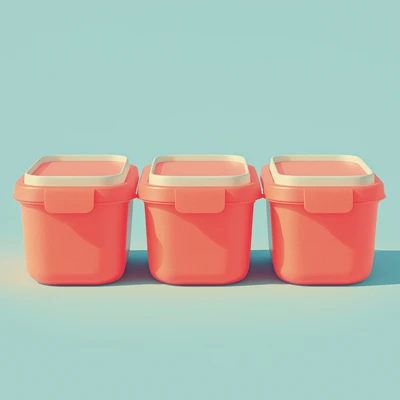
Portion Monday–Wednesday meals into containers (refrigerator). Portion Thursday–Friday into freezer-safe containers. Label everything with the date.
Critical safety step: Cool all food to room temperature within 2 hours before refrigerating. Never place hot food directly in the fridge — it raises the internal temperature and creates a danger zone for bacterial growth. Spread food in shallow containers to speed cooling. Bacillus cereus, which can produce heat-stable toxins, thrives in rice and grains left at room temperature too long.
Three meal templates
1. Break-fast bowl (2 minutes to assemble)
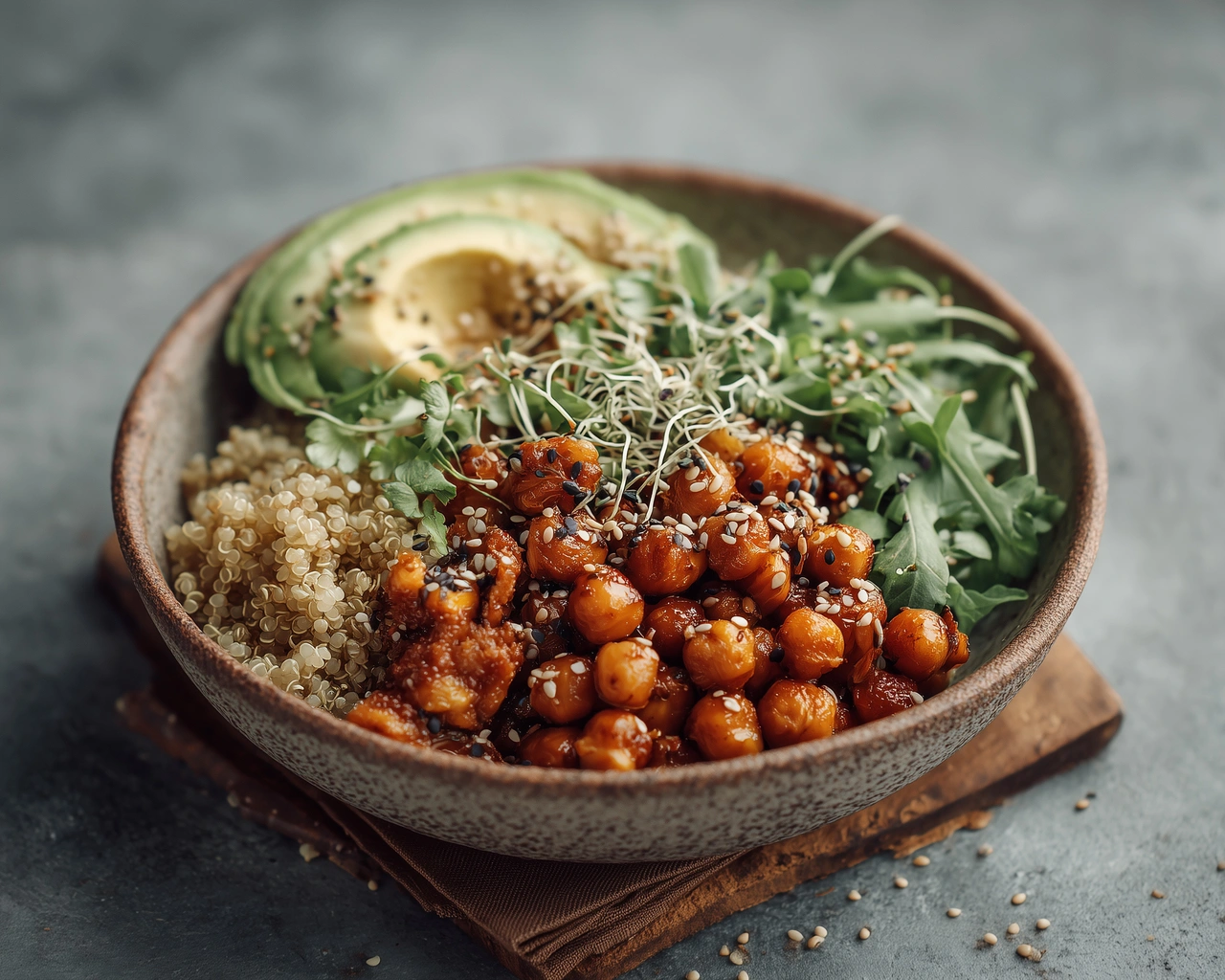
Base of pre-cooked grains, topped with a sliced boiled egg, roasted vegetables, a handful of greens, and a generous spoonful of tahini sauce. Microwave the grains and veg for 90 seconds if you prefer it warm.
2. Mason jar salad (stays fresh 3–5 days)
Layer from bottom to top: dressing first (prevents soggy greens), sturdy vegetables (carrots, peppers, cucumber), protein (lentils, chicken, or chickpeas), grain, leafy greens on top. When ready to eat, shake and pour into a bowl. The layering order is essential — dressing on the bottom, delicate greens on top.
3. Sheet pan dinner (25 minutes, mostly hands-off)
Take pre-prepped protein from the fridge, add fresh or pre-prepped vegetables, toss on a sheet pan with olive oil and seasoning, roast at 200°C/400°F. This works best Thursday–Friday, using frozen portions thawed in the fridge overnight.
Storage safety chart
Follow USDA FSIS guidelines:
| Food | Refrigerator (4°C / 40°F) | Freezer (-18°C / 0°F) |
|---|---|---|
| Cooked chicken | 3–4 days | 2–6 months |
| Cooked rice / grains | 3–4 days | 6 months |
| Cooked lentils / beans | 3–4 days | 6 months |
| Hard-boiled eggs | 7 days (peeled: 5 days) | Not recommended |
| Roasted vegetables | 3–5 days | 8–12 months |
| Homemade sauces | 5–7 days | 3–6 months |
| Raw prepped vegetables | 3–5 days | Blanch first |
Reheating rule: All reheated food must reach an internal temperature of 74°C / 165°F. Stir midway through microwaving to eliminate cold spots.
Essential equipment (3 tiers)
Must-have (under £30 / €35 total): A large baking sheet, a set of glass containers with lids (glass stores and reheats better than plastic), a sharp chef's knife.
Recommended (under £60 / €70): A rice cooker or Instant Pot (hands-free grain cooking), a salad spinner, a food thermometer.
Nice-to-have: A mandoline for fast uniform slicing, mason jars for salads, a label maker (seriously — you'll use it).
Common mistakes
- Ignoring the 4-day rule. Meal prep from Sunday is safe through Wednesday. If you're eating it Thursday or later, it should have been frozen on Sunday and thawed in the fridge overnight.
- Cooling too slowly. Leaving a large pot of rice on the counter for hours invites Bacillus cereus. Spread food in shallow containers and refrigerate within 2 hours (1 hour if the room is above 32°C / 90°F).
- No labels. You will not remember what you froze or when. Date everything.
- Over-prepping. Start with prepping for 3–4 days, not 7. Find your rhythm first.
- Rinsing raw chicken. This is a common practice that the USDA explicitly advises against — it spreads bacteria around the sink and counter without killing anything. Heat kills pathogens; water splashes them.
The goal isn't perfection. It's having good food ready when you need it, so the default choice is a healthy one. Two hours on Sunday buys you that for the rest of the week.
Sources:
- Wolfson JA, Bleich SN. Home Cooking and Health. Fenland Study. PMC5561571.
- Mills S et al. Home Cooking as a Medical Intervention. PMC7232892.
- Monsivais P et al. Home Cooking and Dietary Cost. PMC5401643.
- USDA FSIS. Cold Food Storage Charts.
Ready to transform your meal planning?
Join families saving time and eating healthier with MealMint's AI-powered meal planning platform.